





All Categories
- Industrial LCD display
-
Industrial Products
- DC Servo Drive
- AC Servo Drive
- other
- Heidelberg
- FANUC
- IFM
- Meter
- CCD
- Membrane Keypad
- Film
- YOKOGAWA Module
- Card
- ABB
- MITSUBISHI
- FANUC
- KEYENCE
- BECKHOFF
- Honeywell
- HOLLYSYS
- FUJI servo drives
- HP
- solenoid valve
- thermostat
- Siemens adapter
- color oscilloscope
- Fujitsu connector
- CHELIC
- SMC
- CISCO Module
- INTEL
- Key board
- FAIRCHILD
- Motherboard
- Board
- Bearing
- other
- Control Panel
- Contactor
- Circuit
- OMRON
- Relay
- Controller
- Photoelectric Switch
- Photoelectric Sensor
- Original
- Fan
- Motor Driver
- Limit Switch
- Amplifier
- power supply
- LENZE
- Cable
- Encoder
- Sensor
- Transformer
- Fiber Optic Sensor
- Protection Relay
- Temperature Controller
- Proximity Switch
- Switch Sensor
- Siemens
- Industrial board
- HMI Touch Glass
-
HMI Full Machine Whole unit
- OMRON HMI Touch Panel
- Siemens HMI Touch Panel
- Mitsubishi HMI Touch Panel
- Allen-Bradley automation HMI Touch Panel
- DELTA HMI Touch Panel
- EVIEW DELTA HMI Touch Panel
- KINCO DELTA HMI Touch Panel
- HITECH HMI Touch Panel
- WEINTECK HMI Touch Panel
- TECVIEW HMI Touch Panel
- WEINVIEW HMI Touch Panel
- PRO-FACE HMI Touch Panel
- SIMATIC HMI Touch Panel
- AMPIRE HMI Touch Panel
- HEIDELBERG HMI Touch Panel
- PANASONIC HMI Touch Panel
- PATLITE HMI Touch Panel
- KYOCERA HMI Touch Panel
- KEYENCE HMI Touch Panel
- WEINVIEW HMI Touch Panel
- HITECH HMI Touch Panel
- FUJI HMI Touch Panel
- HAKKO HMI Touch Panel
- SCHNEIDER HMI Touch Panel
- SAMKOON touch panel
- other
- Module
- lcd inverter
- Membrane Keypad Switch
- Winni Touch Screens
- Frequency Inverter
- Servo Motor
- PLC

Recommended Products




Home » News
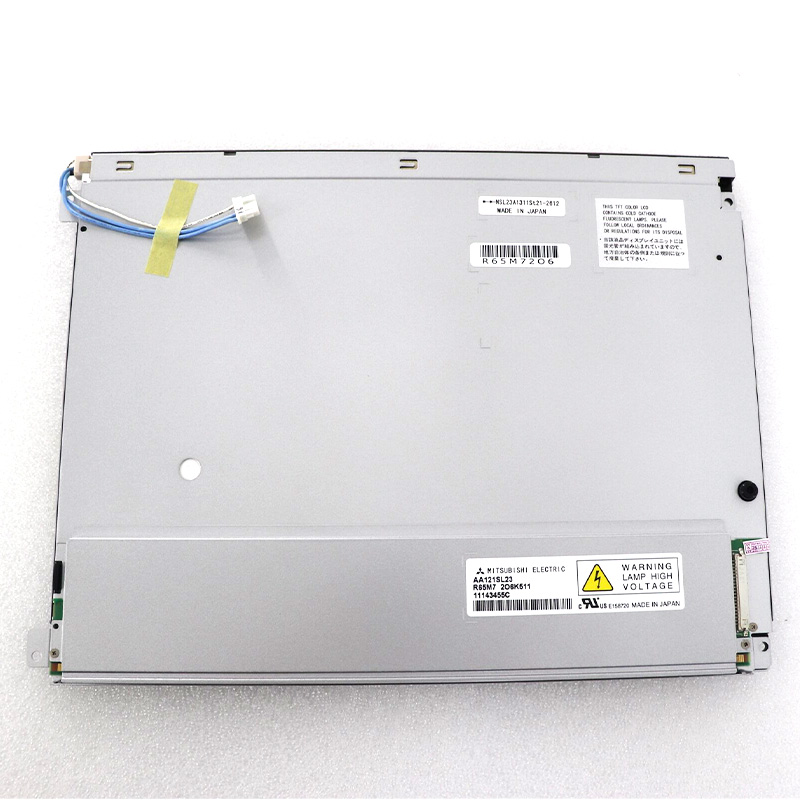
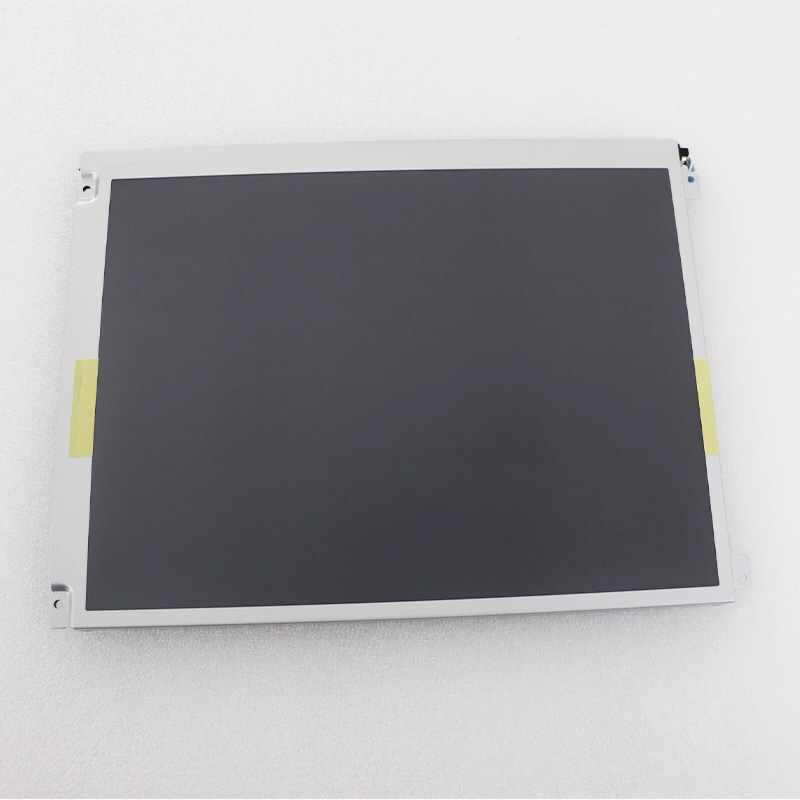
AA121SL23 Mitsubishi 12.1" TFT-LCD Screen, 800x600 Display
In the intricate world of industrial automation, medical instrumentation, and specialized human-machine interfaces (HMI), the display is far more than a simple output device. It is the critical nexus of information, the point where data becomes actionable insight. Selecting the right display module is a foundational engineering decision, impacting system reliability, usability, and longevity. This article provides a deep-dive technical and application analysis of the AA121SL23, a 12.1-inch TFT-LCD module from Mitsubishi Electric, renowned for its robust performance in demanding environments.
We will move beyond basic specifications to explore the engineering rationale behind its design, its position within the industrial display ecosystem, and the tangible benefits it delivers. From its core panel technology and interface architecture to its environmental resilience and integration nuances, this analysis aims to equip engineers, system integrators, and procurement specialists with the knowledge to evaluate its suitability for their most challenging applications. Understanding the why behind the what of the AA121SL23 is key to unlocking its full potential in professional and industrial settings.
Core Technology and Specification Analysis
The Mitsubishi AA121SL23 is built around a 12.1-inch diagonal active matrix TFT (Thin-Film Transistor) LCD panel with a native resolution of 800 x 600 pixels (SVGA). This 4:3 aspect ratio is a deliberate and significant choice. Unlike the widescreen formats prevalent in consumer electronics, the 4:3 format offers a more vertical workspace, ideal for displaying traditional machine control panels, diagnostic data lists, legacy application interfaces, and schematic diagrams without excessive wasted space or unnatural compression.
The 800x600 SVGA resolution provides a sharp pixel pitch suitable for arm's-length viewing, delivering clear text and detailed graphics. The module typically incorporates a high-brightness CCFL (Cold Cathode Fluorescent Lamp) backlight system, a technology valued in industrial contexts for its consistent performance across a wide temperature range and proven longevity. This combination of mature, reliable technologies results in a display known for its stability and predictable performance, a crucial factor in systems where downtime is not an option.
Interface and Signal Integration
Integration is where display specifications meet system reality. The AA121SL23 is designed for straightforward connectivity in embedded systems, primarily featuring a standard LVDS (Low-Voltage Differential Signaling) interface. LVDS is the industry workhorse for internal display connectivity, prized for its robustness against electromagnetic interference (EMI), low power consumption, and ability to transmit high-speed data over relatively long cable runs within a chassis compared to earlier TTL interfaces.
The module accepts analog RGB signals, which are then processed internally. This dual-path design offers flexibility, allowing it to connect to a wide array of industrial single-board computers (SBCs), embedded controllers, and graphics cards that output standard VGA/SVGA signals. Understanding the power sequence requirements, signal timing, and the need for an accompanying LVDS transmitter chip on the host controller board are essential steps for a successful integration, preventing issues like no-display or image flicker.
Mechanical and Environmental Durability
The true value of an industrial-grade component like the AA121SL23 is tested beyond the lab bench. Its construction is engineered for physical and environmental resilience. The module is housed in a sturdy metal frame, providing electromagnetic shielding and structural rigidity to withstand vibration and shock common in factory floor or mobile applications. The front surface typically consists of a durable acrylic panel or offers an option for a hardened glass overlay, providing protection against scratches and minor impacts.
Operating temperature range is a critical specification. Industrial displays must perform reliably in non-climate-controlled environments. The AA121SL23 is designed to operate across a broad temperature spectrum, often from below freezing to elevated temperatures exceeding 50°C. This reliability ensures readability and functionality whether installed in a refrigerated logistics terminal, a sun-exposed outdoor kiosk, or near heat-generating machinery on a production line.
Application-Specific Advantages
The specific characteristics of the AA121SL23 make it a preferred solution in several key vertical markets. In industrial automation, its 4:3 format is perfect for PLC and SCADA visualization screens, displaying control panels, alarm lists, and real-time process data without compromise. In medical devices, such as diagnostic ultrasound systems or patient monitors, its consistent color representation, high reliability, and ease of sterilization around the bezel are paramount.
Furthermore, it finds extensive use in transportation and infrastructure (e.g., train control displays, toll booth systems), test and measurement equipment, and as a direct replacement in legacy machinery upgrades. Its longevity and stable supply chain are as important as its technical specs, ensuring that a piece of capital equipment can be maintained and serviced for decades, protecting the owner's investment.
Comparison with Modern Alternatives
In an era dominated by sleek, widescreen LED-backlit displays, the AA121SL23 represents a different design philosophy. A direct comparison with a modern consumer-grade 12.1-inch panel reveals trade-offs. Contemporary panels offer higher resolutions (e.g., 1920x1200), slimmer profiles, lower power consumption via LED backlights, and wider color gamuts. However, they often lack the extended temperature tolerance, robust metal framing, and long-term availability guarantees.
The choice is fundamentally application-driven. For a commercial digital signage player in a controlled office, a modern panel is superior. For a CNC machine tool on a vibrating factory floor that must operate for 20 years, the AA121SL23's ruggedness, stable supply, and proven interface compatibility are irreplaceable advantages. It serves a niche where reliability trumps the latest consumer trends.
Integration Considerations and Longevity
Successfully deploying the AA121SL23 requires attention to integration details. Engineers must account for the power requirements of the CCFL backlight inverter, ensuring the host power supply can handle the inrush current. Mechanical design must include proper mounting points that respect the module's bezel dimensions and allow for heat dissipation. Furthermore, sourcing is a key consideration.
As a component designed for long-lifecycle products, the AA121SL23 has typically been available for many years. However, with the industry-wide shift to LED backlighting, understanding its current procurement status—whether in active production, limited run, or through authorized distributors with stock—is a vital part of project planning. Its value often lies in being a known, reliable entity with a deep history of field performance.
Frequently Asked Questions (FAQs)
Q1: What is the primary interface of the AA121SL23?A1: It primarily uses an LVDS (Low-Voltage Differential Signaling) interface for reliable internal data transmission.
Q2: Why does it use a 4:3 aspect ratio instead of widescreen?A2: The 4:3 ratio is ideal for vertical data display, legacy machine interfaces, and control panels, minimizing wasted space in industrial applications.
Q3: What type of backlight does it have?A3: It typically utilizes a high-brightness CCFL (Cold Cathode Fluorescent Lamp) backlight system for wide-temperature performance and longevity.
Q4: Is this display suitable for outdoor use?A4: While rugged, it may require an additional protective front filter or enclosure for direct sunlight and weather exposure, depending on the specific model variant.
Q5: Can it directly replace a failing display in old equipment?A5: Yes, it is a common choice for legacy system upgrades due to its standard SVGA resolution and industrial durability, but mechanical and electrical compatibility must be verified.
Q6: What are its main advantages over consumer LCD panels?A6: Key advantages include a wider operating temperature range, a robust metal frame, better resistance to vibration, and long-term availability for industrial product lifecycles.
Q7: What is the native resolution of the AA121SL23?A7: The native resolution is 800 x 600 pixels (SVGA).
Q8: What industries commonly use this display module?A8: It is prevalent in industrial automation, medical devices, transportation systems, test equipment, and machine tool controls.
Q9: Does it support touchscreen functionality?A9: The standard AA121SL23 is a display-only module. Touchscreen functionality (resistive or capacitive) would require an additional overlay panel.
Q10: Why is long-term supply important for this component?A10: Industrial and medical equipment often have lifespans exceeding 10-15 years. Guaranteed display availability is critical for manufacturing, maintenance, and repair over the entire product lifecycle.
Conclusion
The Mitsubishi AA121SL23 12.1-inch TFT-LCD module exemplifies the principle that in specialized engineering contexts, the optimal technology is not always the newest, but the most appropriate. Its enduring design, centered on the reliable SVGA 4:3 format, robust CCFL backlighting, and industrial-grade construction, is a direct response to the uncompromising demands of factory floors, medical suites, and critical infrastructure.
This analysis underscores that selecting a display is a strategic decision. It involves weighing factors like environmental hardening, lifecycle support, and interface stability against raw pixel density or slim profiles. For applications where failure is not an option and systems are built to last, the AA121SL23 remains a benchmark of proven performance, offering a blend of durability and integration maturity that continues to secure its place in the backbone of industrial technology.