





- Industrie-LCD-Display
-
Industrial Products
- DC Servo Drive
- AC Servo Drive
- other
- Heidelberg
- FANUC
- IFM
- Meter
- CCD
- Membrane Keypad
- Film
- YOKOGAWA
- Card
- ABB
- MITSUBISHI
- FANUC
- KEYENCE
- BECKHOFF
- Honeywell
- HOLLYSYS
- FUJI servo drives
- HP
- solenoid valve
- thermostat
- Siemens adapter
- color oscilloscope
- Fujitsu connector
- CHELIC
- SMC
- CISCO
- INTEL
- Key board
- FAIRCHILD
- Der Aufsichtsrat
- Board
- Bearing
- other
- Control Panel
- Contactor
- Circuit
- Omron
- Relais.
- Der controller
- Optoelektronische schalter
- Optoelektronische sensoren
- Original
- Fan
- Motortreiber
- Endschalter
- Verstärker
- power supply
- LENZE
- Cable
- Encoder
- Sensor
- Transformator
- Fiber Optic Sensor
- Schutzrelais
- Temperaturregler
- Näherungsschalter
- Switch Sensor
- Siemens
- PCB
- HMI Touch-Glas
-
HMI-Vollautomat Ganze Einheit
- OMRON HMI Touch Panel
- Siemens HMI Touch Panel
- Mitsubishi HMI Touch Panel
- Allen-Bradley Automatisierung HMI Touch
- DELTA HMI Touch Panel
- EVIEW DELTA HMI Touch Panel
- KINCO DELTA HMI Touch Panel
- HITECH HMI Touch Panel
- WEINTECK HMI Touch Panel
- TECVIEW HMI Touch Panel
- WEINVIEW HMI Touch Panel
- PRO-FACE HMI Touch Panel
- SIMATIC HMI Touch Panel
- AMPIRE HMI Touch Panel
- HEIDELBERG HMI Touch Panel
- PANASONIC HMI Touch Panel
- PATLITE HMI Touch Panel
- KYOCERA HMI Touch Panel
- KEYENCE HMI Touch Panel
- WEINVIEW HMI Touch Panel
- HITECH HMI Touch Panel
- FUJI HMI Touch Panel
- HAKKO HMI Touch Panel
- SCHNEIDER HMI Touch Panel
- SAMKOON touch panel
- andere
- Module
- LCD Wechselrichter
- Membran Tastenfeld Schalter
- Winni Touch Screens
- Frequenzumrichter
- Servo Motor
- PLC




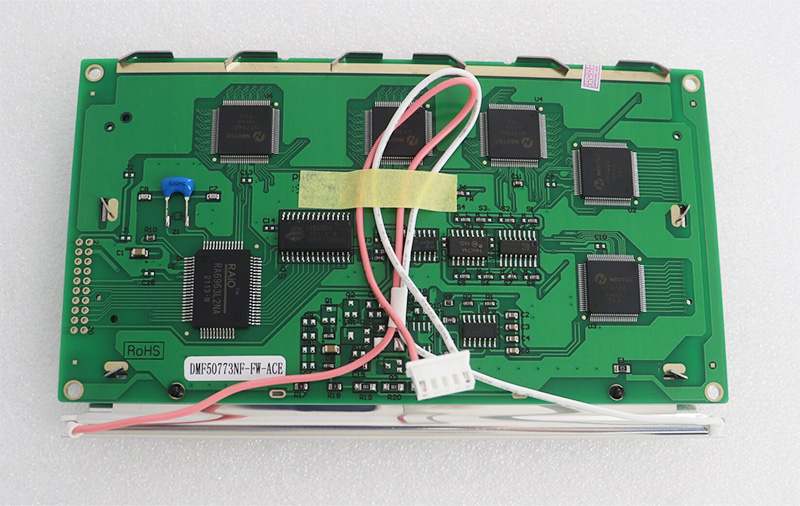
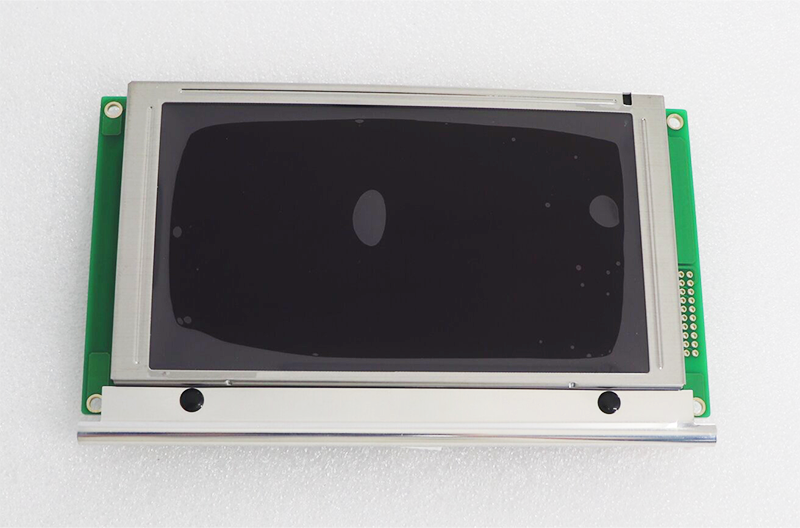
OPTREX 5.4" STN LCD Display Panel DMF50773NF-FW-ACE
We will explore its core technology, the significance of its partnership with the OPTREX ecosystem, and its distinct electrical and mechanical characteristics. Moving beyond specifications, the analysis will cover its ideal application environments, the crucial considerations for system integration, and a balanced view of its advantages and limitations. This deep dive aims to provide engineers, procurement specialists, and product developers with the nuanced understanding necessary to evaluate whether the DMF50773NF-FW-ACE is the optimal visual interface for their next project.
Decoding the Technology: STN LCD Fundamentals
This particular panel is a monochrome, positive-mode display, meaning it shows dark characters on a lighter background (often green, blue, or gray), which enhances readability under various lighting conditions. The 240x128 pixel resolution provides a substantial canvas for detailed text, custom bitmapped graphics, and schematic diagrams without the complexity and cost of a full-color TFT. The STN foundation offers a compelling balance: superior optical performance compared to basic TN screens, while maintaining lower power consumption and cost than active-matrix solutions like TFT-LCDs.
The OPTREX Connection: Ecosystem and Compatibility
Using a panel designed for this ecosystem simplifies the design-in process for engineers. It ensures precise alignment with mounting holes, connector placement, and backlight systems (such as the standard LED or CCFL backlight this panel typically interfaces with). This compatibility reduces development risk and time-to-market, as the optical stack and driving parameters are pre-validated. Sourcing a display within a established manufacturer's framework like OPTREX also provides greater supply chain stability and access to technical support, which is invaluable for industrial and commercial product development.
Electrical and Mechanical Interface Specifications
Mechanically, the 5.4-inch diagonal screen size and 240x128 format define its footprint. Critical details include the outline dimensions, active area size, and the exact position of the flexible printed circuit (FPC) connector. The panel is designed to be mounted within a frame or bezel, and its viewing direction (6 o'clock, 12 o'clock, etc.) is a fixed characteristic that must match the end-product's ergonomics. Attention to these precise mechanical details is essential to avoid costly redesigns and ensure a seamless fit in the final assembly.
Ideal Application Environments and Use Cases
Environments with stable temperature ranges and controlled lighting are ideal. Its monochrome STN technology offers excellent performance in these settings, providing high contrast and wide viewing angles suitable for panel-mounted readouts. The panel is a robust choice for products with long lifecycles, where component longevity and stable sourcing are more critical than flashy multimedia capabilities.
System Integration and Design Considerations
Furthermore, the optical stack must be considered. This includes selecting an appropriate polarizer (which affects contrast and viewing angle) and integrating any required touch overlay (resistive being a common companion for such panels). The mechanical design must account for stress-free mounting to avoid pressure points on the glass that can cause discoloration or damage.
Advantages, Limitations, and Competitive Context
However, its limitations are clear. It is monochrome only, with slider response times unsuitable for fast video. Viewing angles, while good for STN, are inferior to modern IPS panels. In today's market, it faces competition from newer passive OLEDs offering higher contrast and wider viewing angles, and from low-cost TFT modules that offer color. Therefore, its selection is a deliberate choice prioritizing functional reliability, long-term supply, and total system cost over cutting-edge visual performance.
Frequently Asked Questions (FAQs)
Q10: What are its main competitors today?A10: Competitors include other monochrome STN panels, character-only VFDs, and increasingly, small monochrome OLEDs and low-resolution color TFT modules.