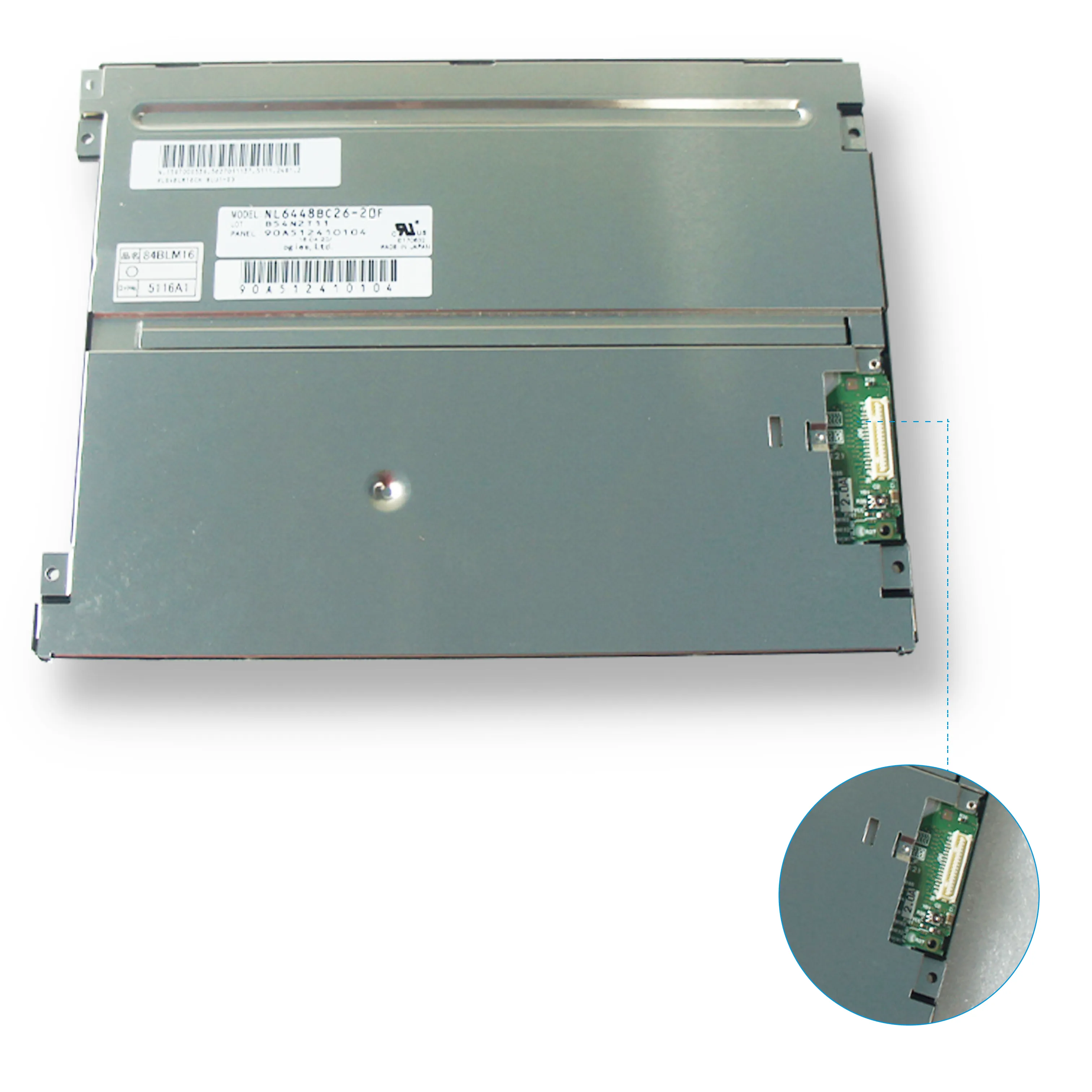
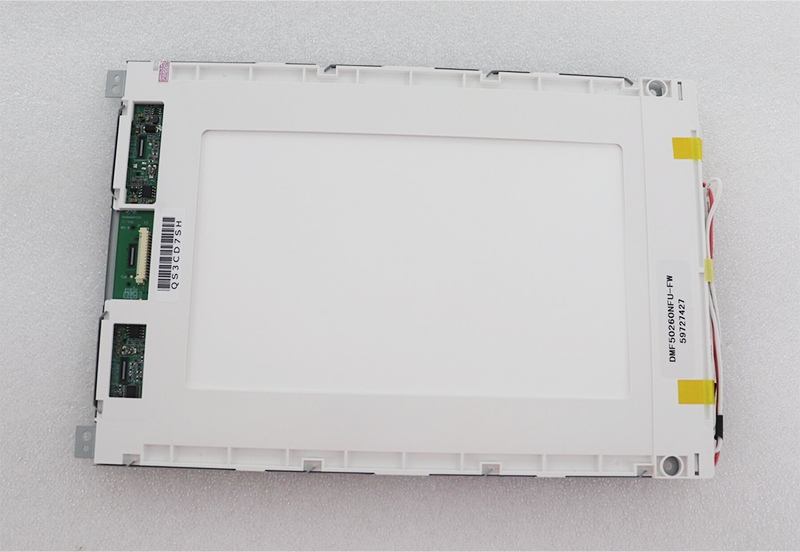
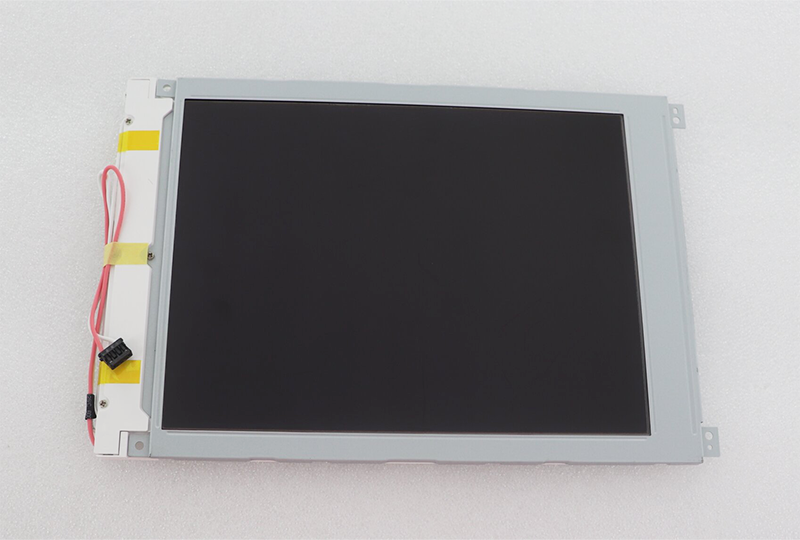
DMF50260NFU-FW OPTREX LCD Display
In the intricate world of electronic design, the choice of a display module can define the user experience, system reliability, and overall success of a product. At the heart of many industrial, medical, and instrumentation applications lies a critical component: the DMF50260NFU-FW from OPTREX. This specific TFT LCD module represents more than just a screen; it is a sophisticated interface solution engineered for demanding environments where clarity, durability, and precise control are non-negotiable.
This article delves into a comprehensive analysis of the DMF50260NFU-FW. We will move beyond basic datasheet specifications to explore its architectural significance, the unique advantages conferred by its built-in controller and white LED backlight, and its practical integration challenges. Our goal is to provide engineers, product designers, and procurement specialists with a deep technical understanding and contextual knowledge, enabling informed decision-making for applications that require robust and high-performance display capabilities.
Architectural Overview and Core Specifications
The OPTREX DMF50260NFU-FW is a 5.0-inch diagonal TFT (Thin-Film Transistor) LCD module offering a resolution of 480 x 272 pixels (WVGA). This form factor and resolution strike a balance between information density and physical size, making it suitable for compact yet data-rich human-machine interfaces (HMIs). The module employs an a-Si (amorphous Silicon) TFT process, which provides good image quality and reliability at a competitive cost point. Its most defining feature is the integrated Fujitsu MB9G711 controller/driver. This system-on-chip (SoC) solution is pivotal, as it houses a dedicated graphics rendering engine, display RAM, and a powerful ARM Cortex-M4F core. This integration transforms the module from a simple display panel into an "intelligent" display terminal capable of independent operation. The module accepts parallel RGB (18-/16-bit) or LVDS video interface signals, offering flexibility for connection to various host processors or FPGAs.
The Intelligence Within: The Fujitsu MB9G711 Controller
The embedded Fujitsu MB9G711 is the brain of the DMF50260NFU-FW. This controller is a game-changer for system architecture. By offloading graphics processing from the main host CPU—tasks such as drawing primitives, rendering fonts, and managing layers—it significantly reduces the host's computational burden and simplifies software development. The controller includes substantial internal memory (up to 384KB SRAM) for frame buffering and graphic objects, and it supports external SDRAM for more complex images. Its integrated 2D graphics accelerator handles operations like alpha blending, area fill, and image rotation in hardware. This allows for smooth animations, complex overlays, and responsive touch feedback without taxing the primary application processor, enabling its use even with lower-cost microcontrollers.
Illumination and Readability: The FW White LED Backlight System
The "FW" suffix in the model name denotes a critical feature: the FineWhite LED backlight system. This is not merely a standard white LED array. OPTREX's FineWhite technology is engineered to deliver a high-quality, uniform white light with excellent color temperature stability and a wide dimming range.
For industrial and medical devices, consistent readability under varying ambient light conditions is paramount. The FW backlight provides high brightness (typically 500 cd/m² or more) to combat glare in brightly lit settings. Simultaneously, it offers precise pulse-width modulation (PWM) dimming control down to very low levels, ensuring clear visibility in dark environments without flicker. This combination of high brightness and deep dimming, coupled with long LED lifespan, ensures durability and optimal user interaction in all lighting scenarios.
Design for Durability: Environmental and Mechanical Robustness
The DMF50260NFU-FW is built to endure. Its operational temperature range typically spans from -20°C to +70°C, accommodating both controlled indoor and harsh outdoor or industrial settings. The construction is designed to resist vibration and shock, common in automotive, transportation, or factory floor applications. The front surface usually incorporates a durable cover glass or polycarbonate panel, which serves as both a protective shield and a bonding surface for resistive or capacitive touch panels (often offered as an option or separate part). This ruggedized design philosophy ensures that the display maintains performance and integrity over a long product lifecycle, reducing the risk of field failures and minimizing maintenance costs for end-users.
Integration Considerations and Hardware Interface
Successfully integrating the DMF50260NFU-FW requires careful planning. Designers must decide whether to leverage its "intelligent" capabilities by using the Fujitsu controller's command interface or to bypass it and drive the panel directly via the RGB/LVDS interface for maximum host control. The former simplifies host software but requires learning the controller's command set; the latter offers flexibility but demands more graphics processing resources from the host. Power sequencing is critical. The module requires multiple voltage rails (e.g., for logic, panel drive, and backlight). Proper power-up and power-down sequences, as detailed in the datasheet, must be strictly followed to prevent latch-up or permanent damage. Furthermore, the high-power white LED backlight requires a dedicated constant-current driver circuit capable of handling the required current and PWM dimming signal.
Application Spectrum and Competitive Positioning
The unique blend of intelligence, robustness, and quality in the DMF50260NFU-FW carves out a specific application niche. It excels in embedded HMIs for industrial automation (PLC operator panels, test equipment), medical devices (patient monitors, diagnostic instruments), and transportation systems (vehicle dashboards, infotainment). In these fields, reliability is as crucial as visual performance. Competitively, it sits above simple "dumb" TFT modules that burden the host CPU. It also offers a more integrated and potentially cost-effective solution compared to pairing a standard TFT panel with a separate high-performance graphics microcontroller. Its value proposition lies in reducing total system cost, development time, and complexity while delivering a reliable, feature-rich display subsystem.
FAQs: DMF50260NFU-FW OPTREX LCD Display
Q1: What does the "FW" in the model name stand for?A1: It stands for "FineWhite," indicating OPTREX's high-performance white LED backlight system known for uniform brightness and wide dimming range.
Q2: Can this display operate without a host processor?A2: No, it requires a host. However, its integrated Fujitsu controller can handle all graphics rendering, significantly reducing the host's workload.
Q3: What is the primary video interface?A3: It supports both parallel RGB (18-/16-bit) and LVDS digital video interfaces for connection to a host CPU or FPGA.
Q4: Does it include a touch screen?A4: The standard DMF50260NFU-FW is a display module. Touch panels (resistive or capacitive) are typically available as optional add-ons or separate related parts.
Q5: What is the typical brightness?A5: The FineWhite backlight typically provides a brightness of 500 cd/m² or higher, suitable for high-ambient-light environments.
Q6: How is the backlight dimming controlled?A6: Dimming is achieved through a PWM (Pulse-Width Modulation) input signal, allowing for precise brightness adjustment from 100% down to very low levels.
Q7: What is the operating temperature range?A7: It is designed to operate reliably within a temperature range of -20°C to +70°C.
Q8: What is the advantage of the integrated Fujitsu controller?A8: It offloads graphics processing from the main host CPU, enabling smoother graphics, faster development, and the use of less powerful/expensive host processors.
Q9: Is this display suitable for automotive applications?A9: Yes, its wide temperature range, robust construction, and high brightness make it suitable for transportation applications, though specific automotive-grade qualifications should be verified.
Q10: Where can I find development resources for the MB9G711 controller?A10: Fujitsu (now Spansion/Cypress, part of Infineon) provides documentation, driver libraries, and application notes. OPTREX may also supply basic sample code and interface manuals.
Conclusion
The OPTREX DMF50260NFU-FW is far more than a simple display component. It represents a sophisticated, system-level solution engineered for critical embedded applications. Its core strength lies in the synergistic combination of a quality TFT panel, the powerful and intelligent Fujitsu MB9G711 graphics controller, and the high-performance FineWhite LED backlight system. For designers tackling industrial, medical, or instrumentation projects, this module offers a compelling path to reduce development complexity, accelerate time-to-market, and achieve a reliable, high-quality user interface. By understanding its integrated architecture, environmental robustness, and precise integration requirements, engineering teams can fully leverage its capabilities to build superior products that stand out in terms of both performance and reliability.