





- Industrie-LCD-Display
-
Industrial Products
- DC Servo Drive
- AC Servo Drive
- other
- Heidelberg
- FANUC
- IFM
- Meter
- CCD
- Membrane Keypad
- Film
- YOKOGAWA
- Card
- ABB
- MITSUBISHI
- FANUC
- KEYENCE
- BECKHOFF
- Honeywell
- HOLLYSYS
- FUJI servo drives
- HP
- solenoid valve
- thermostat
- Siemens adapter
- color oscilloscope
- Fujitsu connector
- CHELIC
- SMC
- CISCO
- INTEL
- Key board
- FAIRCHILD
- Der Aufsichtsrat
- Board
- Bearing
- other
- Control Panel
- Contactor
- Circuit
- Omron
- Relais.
- Der controller
- Optoelektronische schalter
- Optoelektronische sensoren
- Original
- Fan
- Motortreiber
- Endschalter
- Verstärker
- power supply
- LENZE
- Cable
- Encoder
- Sensor
- Transformator
- Fiber Optic Sensor
- Schutzrelais
- Temperaturregler
- Näherungsschalter
- Switch Sensor
- Siemens
- PCB
- HMI Touch-Glas
-
HMI-Vollautomat Ganze Einheit
- OMRON HMI Touch Panel
- Siemens HMI Touch Panel
- Mitsubishi HMI Touch Panel
- Allen-Bradley Automatisierung HMI Touch
- DELTA HMI Touch Panel
- EVIEW DELTA HMI Touch Panel
- KINCO DELTA HMI Touch Panel
- HITECH HMI Touch Panel
- WEINTECK HMI Touch Panel
- TECVIEW HMI Touch Panel
- WEINVIEW HMI Touch Panel
- PRO-FACE HMI Touch Panel
- SIMATIC HMI Touch Panel
- AMPIRE HMI Touch Panel
- HEIDELBERG HMI Touch Panel
- PANASONIC HMI Touch Panel
- PATLITE HMI Touch Panel
- KYOCERA HMI Touch Panel
- KEYENCE HMI Touch Panel
- WEINVIEW HMI Touch Panel
- HITECH HMI Touch Panel
- FUJI HMI Touch Panel
- HAKKO HMI Touch Panel
- SCHNEIDER HMI Touch Panel
- SAMKOON touch panel
- andere
- Module
- LCD Wechselrichter
- Membran Tastenfeld Schalter
- Winni Touch Screens
- Frequenzumrichter
- Servo Motor
- PLC


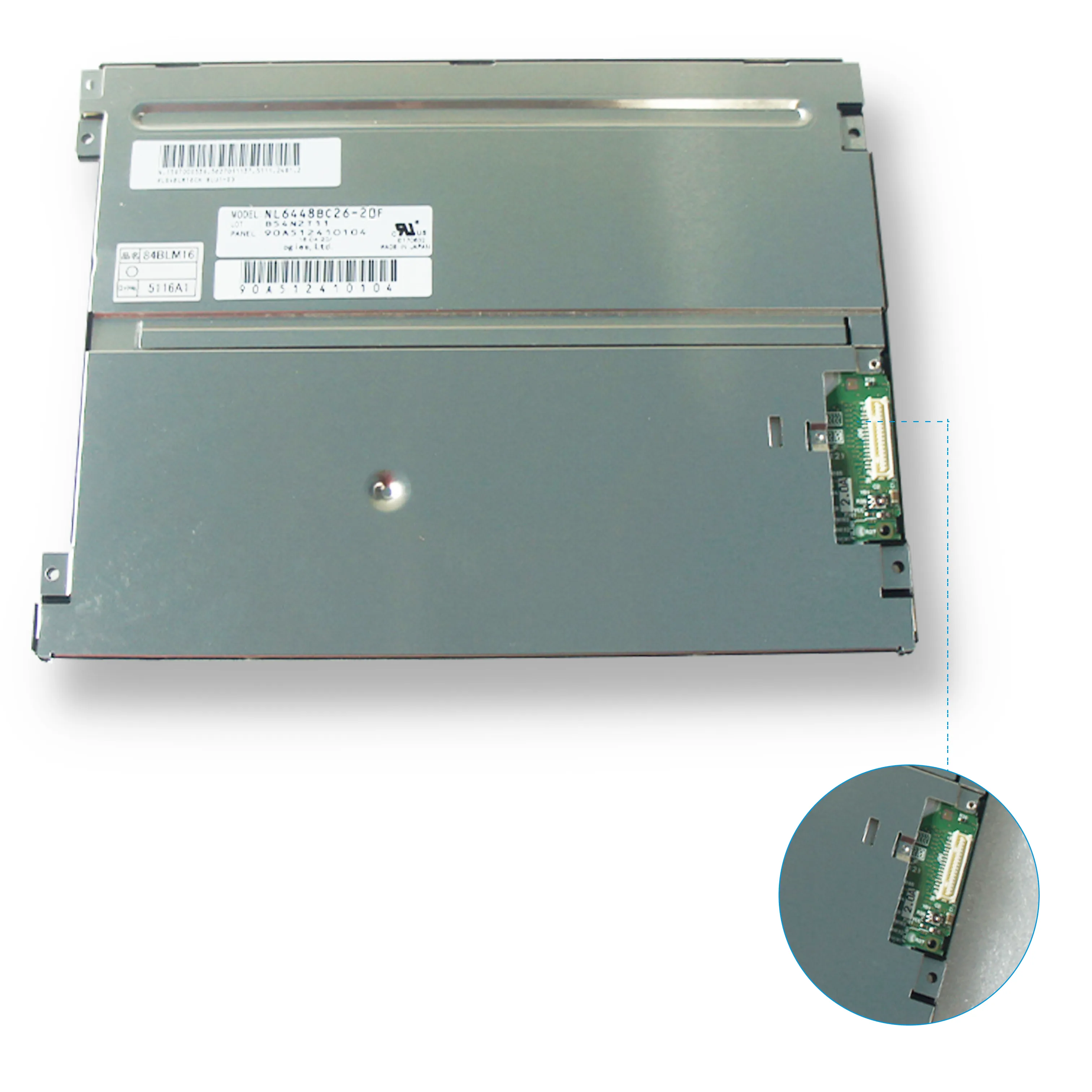


DMF-51043NFU-FW-1 7.4-inch 640*480 LCD panel
We will dissect its core specifications, from the fundamental VGA-resolution TFT LCD to its integrated optical bonding and robust mechanical design. Beyond the datasheet, we will delve into the practical implications of its features—its sunlight readability, wide-temperature operation, and comprehensive interface options. This deep dive aims to equip engineers, product designers, and procurement specialists with the insights needed to evaluate whether this panel is the optimal visual interface for their next-generation medical devices, industrial HMIs, portable instrumentation, or transportation systems.
Decoding the Specification: Core Architecture of the DMF-51043NFU-FW-1
The module is not merely a bare LCD. It is a fully integrated system comprising the LCD glass, driver electronics, a LED backlight unit, and a crucial optical bonding layer. This integration is housed within a rigid metal frame, providing structural integrity and defining a precise frontal bezel area. The "FW" in its part number signifies a wide-temperature specification, indicating the use of components and materials rated for operation in extended thermal ranges, a first hint at its ruggedized design philosophy aimed at surpassing commercial-grade display limitations.
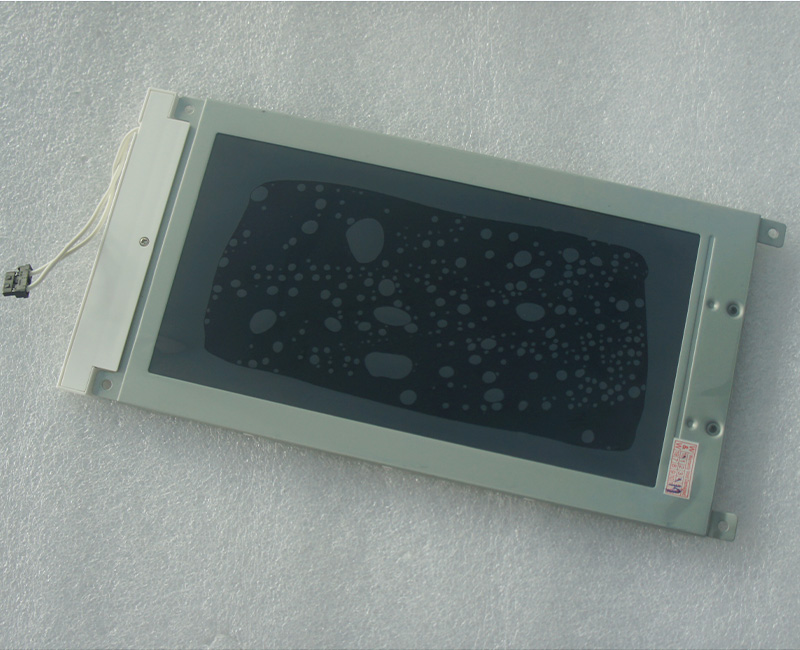

The Clarity Advantage: Optical Bonding and Sunlight Readability
Firstly, it drastically reduces surface reflections by eliminating the reflective air-glass interfaces. Secondly, it enhances contrast by minimizing internal light scattering. The combined effect is dramatically improved sunlight readability. In outdoor or brightly lit indoor settings (like factories or medical operating rooms), where glare can render standard displays useless, the optically bonded DMF-51043NFU-FW-1 remains clearly legible. This makes it an ideal candidate for applications like field-deployable military equipment, construction machinery interfaces, or outdoor payment systems, where information must be accessible under any ambient light.
Built for Endurance: Rugged Design and Wide-Temperature Operation
Beyond temperature, the design mitigates other physical challenges. The metal frame and optical bonding enhance resistance to vibration and shock, critical in mobile or heavy machinery applications. The bonded layer also provides an additional barrier against moisture and condensation ingress. Furthermore, the surface is often treated with a hard coating to resist scratches and abrasions from frequent use or cleaning with chemicals, ensuring long-term visual clarity and physical durability in harsh workshop or clinical environments.
Interface and Integration: Connecting to Your System
The module includes an onboard power supply circuit, accepting a typical input of 3.3V or 5V and generating the various voltages required by the TFT and backlight internally. This reduces the power design burden on the host system. Additionally, the mechanical footprint, mounting hole patterns, and connector placement are precisely defined, allowing for straightforward mechanical integration into a product's enclosure. Designers must carefully consider the location of the connector and cable routing in their overall assembly design.
Application Landscapes: Where This Display Excels
In the medical field, its wide-temperature performance supports autoclave-adjacent or mobile diagnostic devices, while optical bonding allows for clear viewing in bright surgical suites. Transportation and vehicular applications, such as in-vehicle infotainment systems for heavy trucks, agricultural displays, or aircraft cabin control panels, benefit from its vibration resistance and temperature tolerance. Finally, it is suited for portable and battery-operated instruments like geological survey devices or advanced multimeters, where its balance of clarity, ruggedness, and relatively low power consumption (for an industrial display) is highly valued.
Evaluation and Sourcing Considerations
From a sourcing perspective, the DMF-51043NFU-FW-1 is typically available through specialized distributors of industrial electronic components or directly from display module manufacturers. Lead times can be longer than for consumer displays. Critical support materials to request include detailed mechanical drawings, a comprehensive datasheet with electrical and timing parameters, and interface protocol documentation. For high-volume projects, engaging with the manufacturer early to discuss customization options (e.g., specific touchscreen integration, modified firmware, or bespoke branding) is highly advisable.
FAQs: DMF-51043NFU-FW-1 LCD Panel
10. Where can I source this display module?Through specialized industrial electronics distributors or directly from display module manufacturers.