





- Industrial LCD display
-
Industrial Products
- DC Servo Drive
- AC Servo Drive
- other
- Heidelberg
- FANUC
- IFM
- Meter
- CCD
- Membrane Keypad
- Film
- YOKOGAWA Module
- Card
- ABB
- MITSUBISHI
- FANUC
- KEYENCE
- BECKHOFF
- Honeywell
- HOLLYSYS
- FUJI servo drives
- HP
- solenoid valve
- thermostat
- Siemens adapter
- color oscilloscope
- Fujitsu connector
- CHELIC
- SMC
- CISCO Module
- INTEL
- Key board
- FAIRCHILD
- Motherboard
- Board
- Bearing
- other
- Control Panel
- Contactor
- Circuit
- OMRON
- Relay
- Controller
- Photoelectric Switch
- Photoelectric Sensor
- Original
- Fan
- Motor Driver
- Limit Switch
- Amplifier
- power supply
- LENZE
- Cable
- Encoder
- Sensor
- Transformer
- Fiber Optic Sensor
- Protection Relay
- Temperature Controller
- Proximity Switch
- Switch Sensor
- Siemens
- Industrial board
- HMI Touch Glass
-
HMI Full Machine Whole unit
- OMRON HMI Touch Panel
- Siemens HMI Touch Panel
- Mitsubishi HMI Touch Panel
- Allen-Bradley automation HMI Touch Panel
- DELTA HMI Touch Panel
- EVIEW DELTA HMI Touch Panel
- KINCO DELTA HMI Touch Panel
- HITECH HMI Touch Panel
- WEINTECK HMI Touch Panel
- TECVIEW HMI Touch Panel
- WEINVIEW HMI Touch Panel
- PRO-FACE HMI Touch Panel
- SIMATIC HMI Touch Panel
- AMPIRE HMI Touch Panel
- HEIDELBERG HMI Touch Panel
- PANASONIC HMI Touch Panel
- PATLITE HMI Touch Panel
- KYOCERA HMI Touch Panel
- KEYENCE HMI Touch Panel
- WEINVIEW HMI Touch Panel
- HITECH HMI Touch Panel
- FUJI HMI Touch Panel
- HAKKO HMI Touch Panel
- SCHNEIDER HMI Touch Panel
- SAMKOON touch panel
- other
- Module
- lcd inverter
- Membrane Keypad Switch
- Winni Touch Screens
- Frequency Inverter
- Servo Motor
- PLC


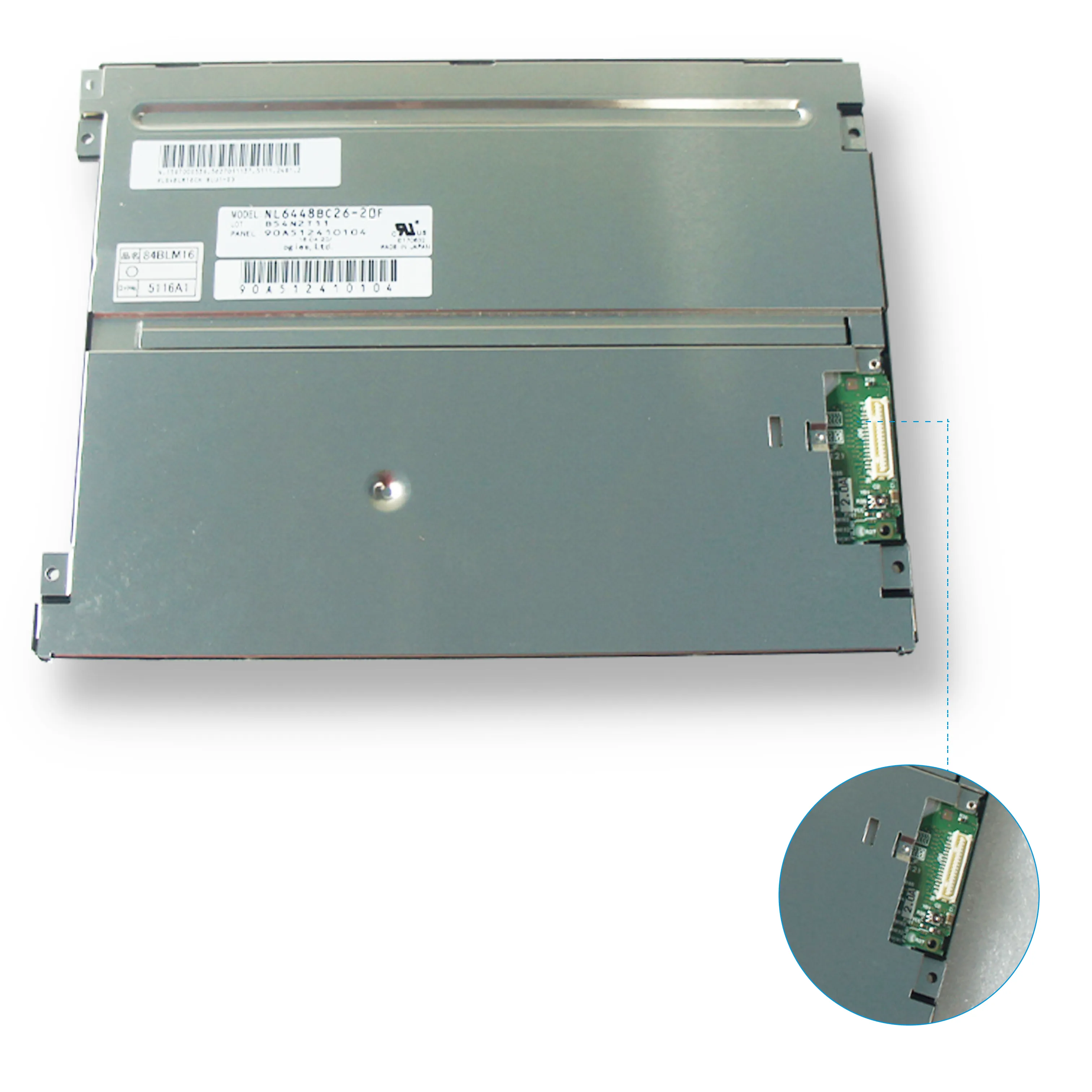

AA121ST01 Mitsubishi 12.1" TFT-LCD screen 800*600 Display
In the intricate world of industrial and embedded display solutions, the Mitsubishi AA121ST01 stands as a testament to a specific era of engineering excellence. This 12.1-inch TFT-LCD module, with its 800 x 600 SVGA resolution, represents more than just a collection of specifications; it embodies a design philosophy centered on reliability, longevity, and performance in demanding environments. While newer panels boast higher pixel densities, the enduring relevance of this display lies in its robust architecture and proven track record.
This article delves deep into the Mitsubishi AA121ST01, moving beyond basic datasheet parameters to explore its technical DNA, application landscapes, and the critical considerations for integration and maintenance. We will unpack why this particular model has carved out a persistent niche in sectors where failure is not an option, and what makes it a continued point of reference for engineers and procurement specialists navigating the complex terrain of industrial display technology.
Technical Architecture and Core Specifications
At its heart, the AA121ST01 is an a-Si (amorphous Silicon) TFT-LCD module. The 12.1-inch diagonal active area delivers an 800 x 600 pixel array, a format known as SVGA. This resolution, while considered standard definition by modern consumer standards, offers a distinct advantage in industrial contexts: excellent legibility and compatibility with legacy systems without demanding excessive processing power. The display utilizes a CCFL (Cold Cathode Fluorescent Lamp) backlighting system, a technology prized for its uniform brightness and stable performance over a wide temperature range.
The module's interface is a critical aspect, typically featuring an LVDS (Low Voltage Differential Signaling) input. This interface provides robust noise immunity, which is crucial for maintaining signal integrity in electrically noisy industrial environments. Key performance parameters include a high contrast ratio for clear image separation, wide viewing angles (both horizontal and vertical) to accommodate multiple operators, and a carefully calibrated color gamut suitable for diagnostic and monitoring applications. Its construction is designed for rigidity and to protect the delicate LCD panel from vibration and shock.
Defining the Niche: Target Applications and Industries
The AA121ST01 was engineered not for the living room, but for the control room, the factory floor, and the medical bay. Its primary domain is industrial automation, where it serves as the human-machine interface (HMI) for PLCs, CNC machines, and process control systems. Here, its reliability under continuous operation and resistance to environmental interference are paramount. In the medical field, this display has found application in diagnostic equipment, patient monitoring systems, and surgical consoles, where color accuracy and consistent performance are non-negotiable.
Beyond these, it has been a staple in transportation (avionics, marine instrumentation), test and measurement equipment, and specialized point-of-sale or kiosk systems in harsh conditions. The common thread across all these applications is the need for a display that functions as a dependable, long-term component within a larger, mission-critical system. It is a solution for scenarios where a commercial off-the-shelf monitor would falter due to temperature extremes, constant vibration, or 24/7 operational demands.
The Integration Blueprint: Electrical and Mechanical Considerations
Successfully deploying the AA121ST01 requires careful attention to integration details. Electrically, designers must ensure the host system provides a stable and compliant LVDS signal, matching the module's required timing, voltage levels, and pin configuration. The power supply for both the logic board and the CCFL backlight inverter must be clean and adequately rated, as power noise can directly manifest as visual artifacts on the screen.
Mechanically, the module is designed for panel-mounting into a chassis. Integrators must account for its precise bezel dimensions, mounting hole patterns, and overall depth. Thermal management is also crucial; while the display itself is robust, adequate ventilation around the module, particularly near the backlight inverter, is essential to prevent overheating and ensure maximum lifespan. Proper grounding and electromagnetic shielding of the entire assembly further guarantee stable operation.


Comparative Analysis: CCFL Backlighting in a LED World
A defining characteristic of the AA121ST01 is its CCFL backlight. In an era dominated by LED-backlit displays, understanding this choice is key. CCFL technology offers exceptional brightness uniformity across the entire screen area and provides a very stable light output over a wide operational temperature range, from freezing cold to intensely hot environments. The spectral quality of the light can also be advantageous for certain color-critical tasks.
However, trade-offs exist. CCFL backlights generally have a shorter lifespan than LEDs (typically 20,000 to 50,000 hours), consume more power, and require a high-voltage inverter circuit, which adds complexity and a potential point of failure. LEDs, in contrast, offer longer life, lower power consumption, and the potential for slimmer designs. The persistence of CCFL in modules like the AA121ST01 underscores a design priority: proven reliability and performance consistency over newer, but sometimes less rugged or uniform, technologies.
Longevity and Obsolescence Management
For industries with product lifecycles spanning decades, display obsolescence is a major challenge. The Mitsubishi AA121ST01, while a mature product, highlights this ecosystem. Proactive obsolescence management is critical. This involves securing a reliable supply chain for both new-old-stock modules and for critical components like replacement CCFL lamps and compatible inverters.
Many system manufacturers face the decision between a last-time buy of the exact module or engineering a replacement upgrade, often to a modern LED-backlit equivalent. This is not a simple swap; it requires electrical, mechanical, and firmware re-engineering. The value of a well-documented, widely used module like the AA121ST01 lies in the extensive application notes and cross-reference data available, which can significantly ease the transition when the inevitable upgrade or replacement becomes necessary.
The Future Legacy: Upgrading and Modern Alternatives
As the AA121ST01 reaches its eventual end-of-life, the market offers modern alternatives that seek to replicate its form, fit, and function. These are often "drop-in replacement" panels featuring LED backlights, improved power efficiency, and sometimes higher resolutions or wider color gamuts. The upgrade path requires meticulous verification: matching the LVDS interface pinout, ensuring the power requirements are met, confirming mechanical compatibility, and validating that the new panel's timing characteristics are supported by the existing system controller.
This transition phase represents the legacy of the AA121ST01. It set a benchmark for industrial-grade performance that new modules must meet or exceed. The knowledge base surrounding its integration continues to inform the design of current and future industrial displays, ensuring that the principles of robustness and reliability it embodied are carried forward into the next generation of technology.
Frequently Asked Questions (FAQs)
Q10: Why choose an older display like this over a newer model?A: For maintaining legacy systems, ensuring compatibility, or sourcing a proven component for a specific long-lifecycle application.
Conclusion
The Mitsubishi AA121ST01 12.1-inch TFT-LCD is far more than a simple display component. It is a benchmark of industrial design, engineered for environments where reliability trumps novelty. Its SVGA resolution and CCFL backlighting, analyzed through a modern lens, reveal a product optimized for specific, demanding use-cases rather than consumer appeal. Its enduring presence in critical sectors underscores the importance of longevity, environmental robustness, and signal integrity in professional applications.
For engineers and system integrators, this module serves as a powerful case study in designing for the long term. It highlights the critical considerations of integration, the realities of component obsolescence, and the careful planning required for future upgrades. As technology marches forward, the principles embodied by the AA121ST01—durability, consistency, and purpose-built design—remain essential guides for selecting and implementing display solutions that truly endure.