





- Industrial LCD display
-
Industrial Products
- DC Servo Drive
- AC Servo Drive
- other
- Heidelberg
- FANUC
- IFM
- Meter
- CCD
- Membrane Keypad
- Film
- YOKOGAWA Module
- Card
- ABB
- MITSUBISHI
- FANUC
- KEYENCE
- BECKHOFF
- Honeywell
- HOLLYSYS
- FUJI servo drives
- HP
- solenoid valve
- thermostat
- Siemens adapter
- color oscilloscope
- Fujitsu connector
- CHELIC
- SMC
- CISCO Module
- INTEL
- Key board
- FAIRCHILD
- Motherboard
- Board
- Bearing
- other
- Control Panel
- Contactor
- Circuit
- OMRON
- Relay
- Controller
- Photoelectric Switch
- Photoelectric Sensor
- Original
- Fan
- Motor Driver
- Limit Switch
- Amplifier
- power supply
- LENZE
- Cable
- Encoder
- Sensor
- Transformer
- Fiber Optic Sensor
- Protection Relay
- Temperature Controller
- Proximity Switch
- Switch Sensor
- Siemens
- Industrial board
- HMI Touch Glass
-
HMI Full Machine Whole unit
- OMRON HMI Touch Panel
- Siemens HMI Touch Panel
- Mitsubishi HMI Touch Panel
- Allen-Bradley automation HMI Touch Panel
- DELTA HMI Touch Panel
- EVIEW DELTA HMI Touch Panel
- KINCO DELTA HMI Touch Panel
- HITECH HMI Touch Panel
- WEINTECK HMI Touch Panel
- TECVIEW HMI Touch Panel
- WEINVIEW HMI Touch Panel
- PRO-FACE HMI Touch Panel
- SIMATIC HMI Touch Panel
- AMPIRE HMI Touch Panel
- HEIDELBERG HMI Touch Panel
- PANASONIC HMI Touch Panel
- PATLITE HMI Touch Panel
- KYOCERA HMI Touch Panel
- KEYENCE HMI Touch Panel
- WEINVIEW HMI Touch Panel
- HITECH HMI Touch Panel
- FUJI HMI Touch Panel
- HAKKO HMI Touch Panel
- SCHNEIDER HMI Touch Panel
- SAMKOON touch panel
- other
- Module
- lcd inverter
- Membrane Keypad Switch
- Winni Touch Screens
- Frequency Inverter
- Servo Motor
- PLC



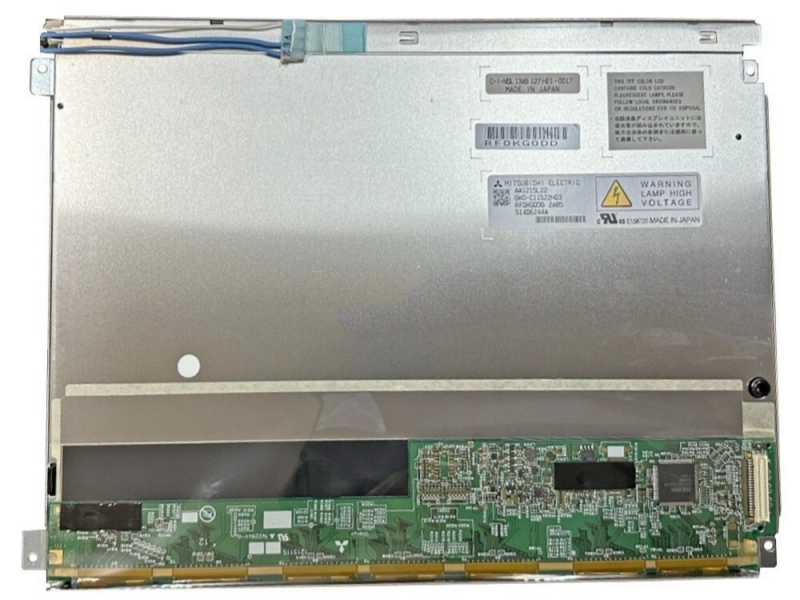
In the intricate world of industrial automation, human-machine interface (HMI) units serve as the critical bridge between complex machinery and human operators. The choice of display panel is not merely a cosmetic decision; it is a foundational component that dictates usability, reliability, and overall system performance in demanding environments. This article delves into a specific, high-caliber component that exemplifies these engineering priorities: the AA121SL22 Mitsubishi 12.1" LCD Screen.
Our exploration moves beyond basic specifications to uncover the intrinsic value this display module offers to system integrators, OEMs, and maintenance engineers. We will analyze its core technological strengths, from its robust 800 x 600 SVGA resolution to its exceptional optical performance and ruggedized design. By examining its electrical characteristics, environmental resilience, and seamless integration capabilities within the broader Mitsubishi ecosystem, we aim to provide a comprehensive resource. This deep dive will illuminate why the AA121SL22 remains a trusted and compelling choice for upgrading legacy systems or designing new, robust HMI solutions for factory floors, medical devices, and transportation systems where failure is not an option.
Decoding the Core Specifications: More Than Just Numbers
The AA121SL22 is built around a 12.1-inch diagonal TFT LCD panel with an 800 x 600 pixel SVGA resolution. While this may seem modest compared to consumer-grade high-definition screens, it is a deliberate and optimal choice for industrial applications. This resolution provides exceptional clarity for displaying schematic diagrams, control parameters, and real-time data graphs without overwhelming the processor or communication bandwidth of a PLC-based system. The 4:3 aspect ratio is another strategic feature, offering more vertical screen space for lists, menus, and data tables compared to wider formats, enhancing operational efficiency.
Beyond pixels, the module's native brightness, contrast ratio, and color depth are calibrated for 24/7 operation under challenging lighting conditions. It is engineered to deliver consistent, legible images that reduce operator eye strain during long shifts. Understanding these specifications is the first step in appreciating that every parameter of the AA121SL22 is a calculated response to the real-world demands of industrial visualization, where functionality consistently trumps frivolous features.

Optical Performance and Viewing Experience in Harsh Conditions
The true test of an industrial display occurs not in a lab, but under the glare of factory lights or in direct sunlight. The AA121SL22 addresses this with a high-brightness backlight system, typically ranging from 450 to 600 nits or more, ensuring the screen remains vividly readable even in brightly lit environments. Furthermore, it often incorporates advanced optical bonding techniques. This process fills the air gap between the LCD panel and the front touch screen or cover glass with a clear resin.
Optical bonding delivers profound benefits: it significantly reduces surface reflections that cause glare, enhances contrast by minimizing internal light scattering, and physically strengthens the display assembly against shock and vibration. The result is a viewing experience characterized by improved optical clarity, durability, and reduced operator error. This focus on superior optical performance under duress is what separates a professional-grade industrial module from a standard commercial panel.
Electrical Interface and Seamless System Integration
Integration is paramount, and the AA121SL22 is designed to plug directly into a lineage of Mitsubishi GOT series HMI units, such as the GOT1000 and others. It typically features a standard LVDS (Low-Voltage Differential Signaling) interface, a robust and noise-resistant digital transmission standard ideal for the electrically noisy industrial landscape. This plug-and-play compatibility drastically reduces development time, engineering risk, and lifecycle costs for maintaining or upgrading existing Mitsubishi-based control systems.
For system designers, this seamless integration extends beyond the physical connector. The display's timing controller, power requirements, and form factor are meticulously engineered to match the host unit's expectations. This ensures reliable performance without the need for complex signal conversion or custom power regulation circuits, allowing engineers to focus on application software and functionality rather than troubleshooting display compatibility issues.
Ruggedized Design for Maximum Reliability and Longevity
Industrial environments are unforgiving, subjecting equipment to temperature extremes, conductive dust, humidity, and constant vibration. The AA121SL22 is constructed to endure. Its operating temperature range is wide, often from -20°C to +70°C or better, guaranteeing startup and stable operation in both unheated warehouses and hot machine rooms. The components, from the backlight LEDs to the drive ICs, are selected for their extended lifespan and stability under thermal stress.
The mechanical design prioritizes resilience. A sturdy metal frame provides structural integrity and aids in heat dissipation. This ruggedized philosophy ensures mean time between failures (MTBF) is maximized, directly contributing to lower total cost of ownership by minimizing unplanned downtime and maintenance interventions. In sectors like manufacturing, energy, or heavy machinery, this reliability is not a luxury—it is the core requirement.
Primary Application Scenarios and Industry Use Cases
The AA121SL22 finds its home in any application demanding a reliable, high-visibility interface for monitoring and control. Its most common deployment is within factory automation on production lines, controlling robotic cells, and managing process parameters in chemical or pharmaceutical plants. It is equally vital in public infrastructure, such as water treatment facility control rooms or power substation monitoring systems.
Beyond traditional industry, this display module is suitable for specialized medical equipment, diagnostic devices, and transportation systems like railway control panels or vessel navigation aids. In each case, the common thread is the need for a display that performs flawlessly as the primary window into complex, mission-critical systems, where its reliability directly impacts safety, productivity, and operational continuity.
Considerations for Sourcing, Replacement, and Compatibility
As a component for professional equipment, sourcing the authentic AA121SL22 is crucial. The market contains compatible or refurbished modules, but for critical applications, an OEM-original part guarantees the specified performance, materials, and longevity. When replacing a failed screen in an existing HMI, verifying the exact model number and revision is essential, as minor differences in connector type or backlight voltage can lead to incompatibility.
Engineers must also consider the complete retrofit kit, which may include the LCD module, inverter board (for CCFL backlight versions), and necessary cables. For new designs, consulting the latest Mitsubishi technical documentation is imperative to ensure compatibility with the intended host controller. Understanding these logistical and technical nuances is the final step in successfully leveraging this display's capabilities within a project.
FAQs: AA121SL22 Mitsubishi 12.1" LCD Screen
Q10: Where can I source a genuine AA121SL22?A: Genuine modules should be sourced from authorized Mitsubishi Electric distributors or reputable industrial electronic component suppliers to ensure quality and authenticity.
Conclusion
For professionals tasked with maintaining, upgrading, or designing critical control systems, this display module represents a reliable and high-performance solution. It prioritizes long-term operational integrity, operator clarity, and system compatibility over transient technological trends. In an era where downtime is measured in significant financial loss, choosing a component like the AA121SL22 is a strategic decision that underscores a commitment to quality, reliability, and sustained productivity on the factory floor and beyond.