





- Industrial LCD display
-
Industrial Products
- DC Servo Drive
- AC Servo Drive
- other
- Heidelberg
- FANUC
- IFM
- Meter
- CCD
- Membrane Keypad
- Film
- YOKOGAWA Module
- Card
- ABB
- MITSUBISHI
- FANUC
- KEYENCE
- BECKHOFF
- Honeywell
- HOLLYSYS
- FUJI servo drives
- HP
- solenoid valve
- thermostat
- Siemens adapter
- color oscilloscope
- Fujitsu connector
- CHELIC
- SMC
- CISCO Module
- INTEL
- Key board
- FAIRCHILD
- Motherboard
- Board
- Bearing
- other
- Control Panel
- Contactor
- Circuit
- OMRON
- Relay
- Controller
- Photoelectric Switch
- Photoelectric Sensor
- Original
- Fan
- Motor Driver
- Limit Switch
- Amplifier
- power supply
- LENZE
- Cable
- Encoder
- Sensor
- Transformer
- Fiber Optic Sensor
- Protection Relay
- Temperature Controller
- Proximity Switch
- Switch Sensor
- Siemens
- Industrial board
- HMI Touch Glass
-
HMI Full Machine Whole unit
- OMRON HMI Touch Panel
- Siemens HMI Touch Panel
- Mitsubishi HMI Touch Panel
- Allen-Bradley automation HMI Touch Panel
- DELTA HMI Touch Panel
- EVIEW DELTA HMI Touch Panel
- KINCO DELTA HMI Touch Panel
- HITECH HMI Touch Panel
- WEINTECK HMI Touch Panel
- TECVIEW HMI Touch Panel
- WEINVIEW HMI Touch Panel
- PRO-FACE HMI Touch Panel
- SIMATIC HMI Touch Panel
- AMPIRE HMI Touch Panel
- HEIDELBERG HMI Touch Panel
- PANASONIC HMI Touch Panel
- PATLITE HMI Touch Panel
- KYOCERA HMI Touch Panel
- KEYENCE HMI Touch Panel
- WEINVIEW HMI Touch Panel
- HITECH HMI Touch Panel
- FUJI HMI Touch Panel
- HAKKO HMI Touch Panel
- SCHNEIDER HMI Touch Panel
- SAMKOON touch panel
- other
- Module
- lcd inverter
- Membrane Keypad Switch
- Winni Touch Screens
- Frequency Inverter
- Servo Motor
- PLC


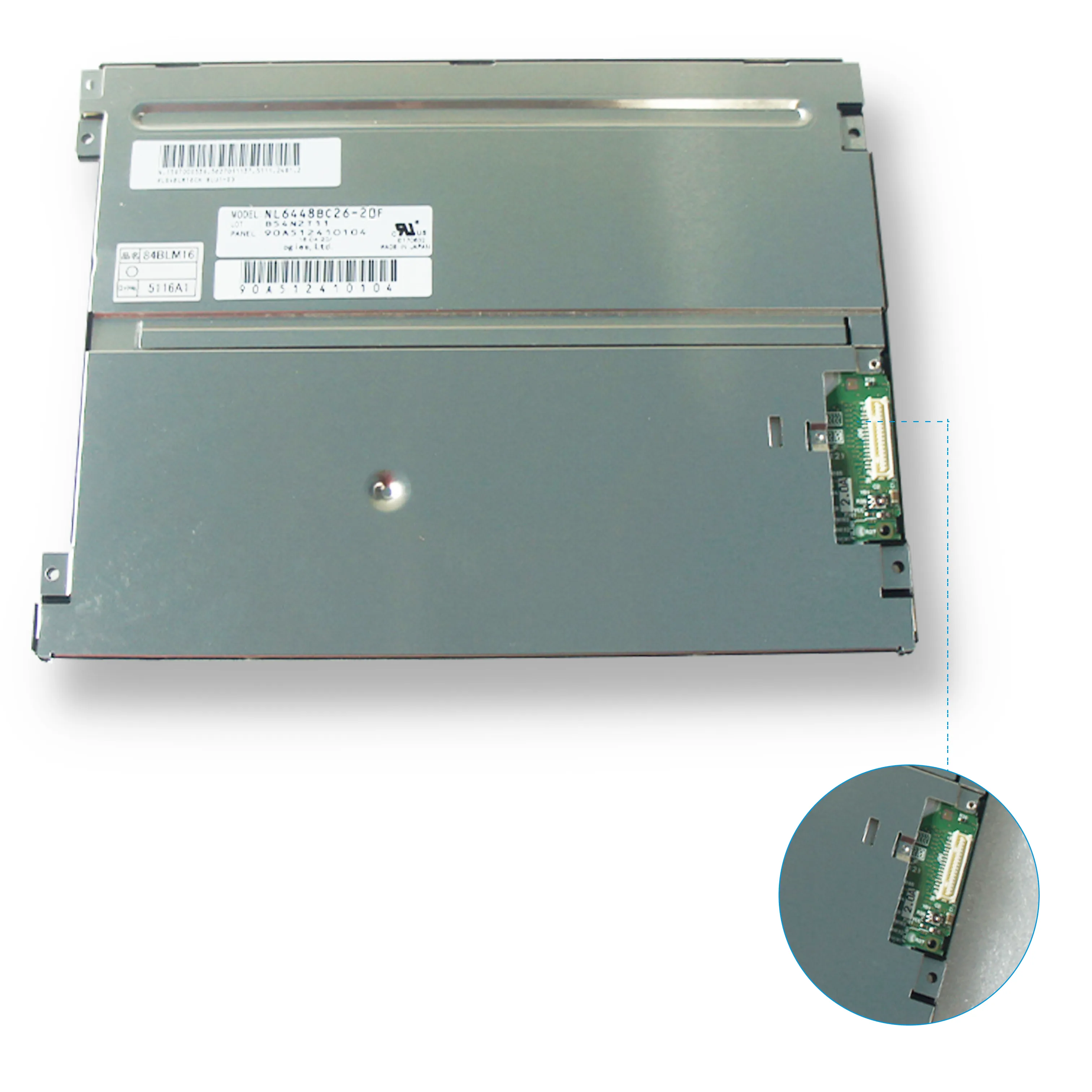

AA104VB05 Mitsubishi 10.4" 640*480 a-Si TFT-LCD Panel
In the intricate world of industrial and embedded display solutions, specific components become the unsung heroes of reliability and performance. One such component is the a-Si TFT-LCD Panel AA104VB05, a 10.4-inch display module designed by Mitsubishi Electric. Characterized by its 640 x 480 pixel (VGA) resolution and built on amorphous Silicon (a-Si) Thin-Film Transistor technology, this panel represents a mature yet persistently vital standard in a market increasingly dominated by high-resolution alternatives. Its continued relevance lies not in cutting-edge specs, but in proven stability, cost-effectiveness, and perfect suitability for demanding applications where failure is not an option.
This article delves into a comprehensive analysis of the Mitsubishi AA104VB05 panel. We will explore its foundational technology, dissect its key specifications and performance characteristics, and examine the specific industrial niches where it excels. Furthermore, we will guide you through critical integration considerations, compare it with newer display technologies, and provide practical insights for sourcing and maintaining this component. Our goal is to move beyond the datasheet and offer a deep, practical understanding for engineers, procurement specialists, and developers whose projects depend on such robust and reliable display solutions.
Understanding the Core Technology: a-Si TFT-LCD
At the heart of the AA104VB05 lies amorphous Silicon Thin-Film Transistor (a-Si TFT) technology. This mature manufacturing process involves depositing non-crystalline silicon on a glass substrate to create the transistors that control each individual pixel. For industrial-grade panels like this Mitsubishi model, the primary advantages are excellent uniformity, high production yield, and relatively low manufacturing cost at standard resolutions like VGA.
Compared to its successors like Low-Temperature Polycrystalline Silicon (LTPS), a-Si technology has limitations in electron mobility, which constrains its ability to drive very high resolutions or ultra-fast refresh rates efficiently. However, for a fixed, mid-size format like 10.4 inches with 640x480 pixels, these limitations are irrelevant. The technology's stability over a wide temperature range and its long-term reliability are paramount. The a-Si process results in a robust panel that can withstand the electrical stresses and continuous operation typical in industrial environments, forming a dependable foundation for the AA104VB05's performance.
Decoding the AA104VB05: Specifications and Performance
The Mitsubishi AA104VB05 is defined by a set of specifications tailored for clarity and durability. Its 10.4-inch diagonal measures a 211.2 x 158.4 mm active area with a 4:3 aspect ratio, the standard for many legacy systems and control interfaces. The 640 x 480 VGA resolution offers a pixel pitch of approximately 0.33mm, providing sharp enough detail for text, numeric readouts, and basic graphics without the complexity and cost of higher-resolution interfaces.
Performance-wise, it typically features a moderate brightness level (e.g., 300-400 nits) sufficient for indoor use, a high contrast ratio for legibility, and wide viewing angles (often 140° horizontal/vertical) crucial for panels mounted in varied orientations. The color presentation is usually 262K colors, achieved via 6-bit + FRC technology, delivering adequate color depth for most industrial HMI applications. The critical performance metric is its operating temperature range, often spanning from -30°C to +80°C, ensuring functionality in harsh settings. The interface is typically a single-channel LVDS, ensuring reliable digital signal transmission with low noise.
Ideal Application Scenarios and Industrial Niches
The true value of the AA104VB05 panel is realized in specific, demanding environments where its characteristics are not just adequate but optimal. Its primary domain is industrial human-machine interfaces (HMIs) for factory automation, process control systems, and machine tooling. Here, the 4:3 VGA display perfectly matches legacy software interfaces, and its ruggedness withstands factory-floor vibrations, temperature fluctuations, and 24/7 operation.
Medical Equipment: Used in diagnostic devices, patient monitors, and laboratory instruments where reliability is critical.
Point-of-Sale (POS) and Kiosk Systems: For durable terminals requiring clear, stable displays under constant public use.
Transportation and Avionics: In non-safety-critical dashboard displays or control units within vehicles, trains, or aircraft, benefiting from the wide temperature tolerance.
Test and Measurement Instruments: Oscilloscopes, spectrum analyzers, and other gear where a clear, flicker-free screen is essential for data interpretation.
In these applications, the panel is valued as a known-quantity, drop-in solution that minimizes design risk and qualification time.
Critical Integration and Interface Considerations
Successfully integrating the AA104VB05 into a product requires careful attention to its electrical and physical requirements. The LVDS interface necessitates a compatible controller board or a processor with an LVDS transmitter. Designers must ensure the timing parameters (clock, syncs) and voltage levels match the panel's datasheet precisely to avoid image artifacts or no display.
Power supply design is crucial; a clean, stable voltage source is needed for the panel's logic and backlight (often a CCFL or LED array). For CCFL versions, a high-voltage inverter is required, which must be properly shielded to prevent electromagnetic interference. Mechanical integration involves accounting for the panel's exact dimensions, mounting hole positions, and bezel size. Furthermore, the choice of touchscreen overlay (if needed)—such as resistive or projective capacitive—must be compatible with the panel's surface and the end-use environment (e.g., gloved operation in industrial settings).
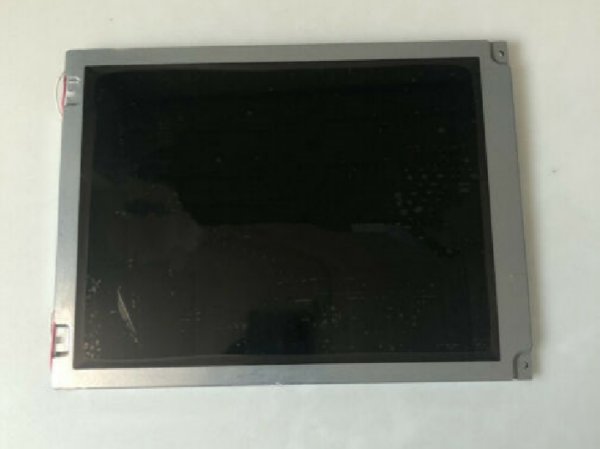

The Competitive Landscape: Comparison with Modern Alternatives
In an era of Full HD and OLED displays, the AA104VB05 occupies a distinct, defensible position. Compared to modern IPS LCD panels, it may offer slightly narrower viewing angles and lower color gamut but excels in wider temperature tolerance and potentially lower cost for the intended resolution. Against higher-resolution TFTs, its advantage is a simpler, lower-bandwidth interface and lower processing power requirements, reducing overall system cost and complexity.
The most significant comparison is with newer panels in the same 10.4-inch VGA class. Here, the Mitsubishi panel's differentiator is its heritage of quality and known reliability. Newer, often generic, panels might match specifications on paper but lack the long-term field validation and consistent manufacturing pedigree of a brand like Mitsubishi. For a critical system upgrade or long-lifecycle product, the AA104VB05 often represents a lower-risk choice than an untested modern equivalent, justifying its continued use despite the availability of newer technology.
Sourcing, Longevity, and Maintenance Strategies
As a product with a long history, sourcing the AA104VB05 requires a strategic approach. While Mitsubishi may have phased out direct production, the panel remains available through specialized distributors, aftermarket suppliers, and on the board-level component market. It is essential to verify the authenticity and grade (industrial vs. commercial) of the panel, as refurbished or reclaimed units may be in circulation.
Last-Time Buy (LTB): Purchasing a lifetime supply of panels for future production and service needs.
Identifying Second Sources: Qualifying a pin-compatible alternative from another manufacturer as a backup.
Module Redesign: Planning a future upgrade path to a newer display technology on a separate board, maintaining system compatibility.
Proper handling and storage, away from moisture and static electricity, are key to maintaining the longevity of spare panels in inventory.
FAQs: Mitsubishi AA104VB05 a-Si TFT-LCD Panel
Q10: What should I consider for power supply design?A10: Ensure a clean, stable DC power source matching the panel's voltage/current requirements, and properly manage the backlight driver (inverter for CCFL or constant current for LED).
Conclusion
The Mitsubishi AA104VB05 a-Si TFT-LCD panel exemplifies how a technologically mature component can maintain critical importance in specialized markets. Its value proposition is not rooted in leading-edge pixel density or color performance, but in its demonstrated reliability, robust design for harsh environments, and perfect suitability for a vast installed base of industrial and medical equipment. In a landscape obsessed with the new, this display module serves as a reminder that consistency and proven performance are invaluable currencies in engineering.
For designers and maintainers of long-lifecycle systems, understanding this panel's strengths, integration requirements, and sourcing landscape is essential. It represents a pragmatic choice that minimizes risk and ensures operational continuity. As the industry evolves, the legacy and lessons of workhorse components like the AA104VB05 will continue to inform the development of future robust display solutions, where durability is just as important as resolution.