





- Industrial LCD display
-
Industrial Products
- DC Servo Drive
- AC Servo Drive
- other
- Heidelberg
- FANUC
- IFM
- Meter
- CCD
- Membrane Keypad
- Film
- YOKOGAWA Module
- Card
- ABB
- MITSUBISHI
- FANUC
- KEYENCE
- BECKHOFF
- Honeywell
- HOLLYSYS
- FUJI servo drives
- HP
- solenoid valve
- thermostat
- Siemens adapter
- color oscilloscope
- Fujitsu connector
- CHELIC
- SMC
- CISCO Module
- INTEL
- Key board
- FAIRCHILD
- Motherboard
- Board
- Bearing
- other
- Control Panel
- Contactor
- Circuit
- OMRON
- Relay
- Controller
- Photoelectric Switch
- Photoelectric Sensor
- Original
- Fan
- Motor Driver
- Limit Switch
- Amplifier
- power supply
- LENZE
- Cable
- Encoder
- Sensor
- Transformer
- Fiber Optic Sensor
- Protection Relay
- Temperature Controller
- Proximity Switch
- Switch Sensor
- Siemens
- Industrial board
- HMI Touch Glass
-
HMI Full Machine Whole unit
- OMRON HMI Touch Panel
- Siemens HMI Touch Panel
- Mitsubishi HMI Touch Panel
- Allen-Bradley automation HMI Touch Panel
- DELTA HMI Touch Panel
- EVIEW DELTA HMI Touch Panel
- KINCO DELTA HMI Touch Panel
- HITECH HMI Touch Panel
- WEINTECK HMI Touch Panel
- TECVIEW HMI Touch Panel
- WEINVIEW HMI Touch Panel
- PRO-FACE HMI Touch Panel
- SIMATIC HMI Touch Panel
- AMPIRE HMI Touch Panel
- HEIDELBERG HMI Touch Panel
- PANASONIC HMI Touch Panel
- PATLITE HMI Touch Panel
- KYOCERA HMI Touch Panel
- KEYENCE HMI Touch Panel
- WEINVIEW HMI Touch Panel
- HITECH HMI Touch Panel
- FUJI HMI Touch Panel
- HAKKO HMI Touch Panel
- SCHNEIDER HMI Touch Panel
- SAMKOON touch panel
- other
- Module
- lcd inverter
- Membrane Keypad Switch
- Winni Touch Screens
- Frequency Inverter
- Servo Motor
- PLC


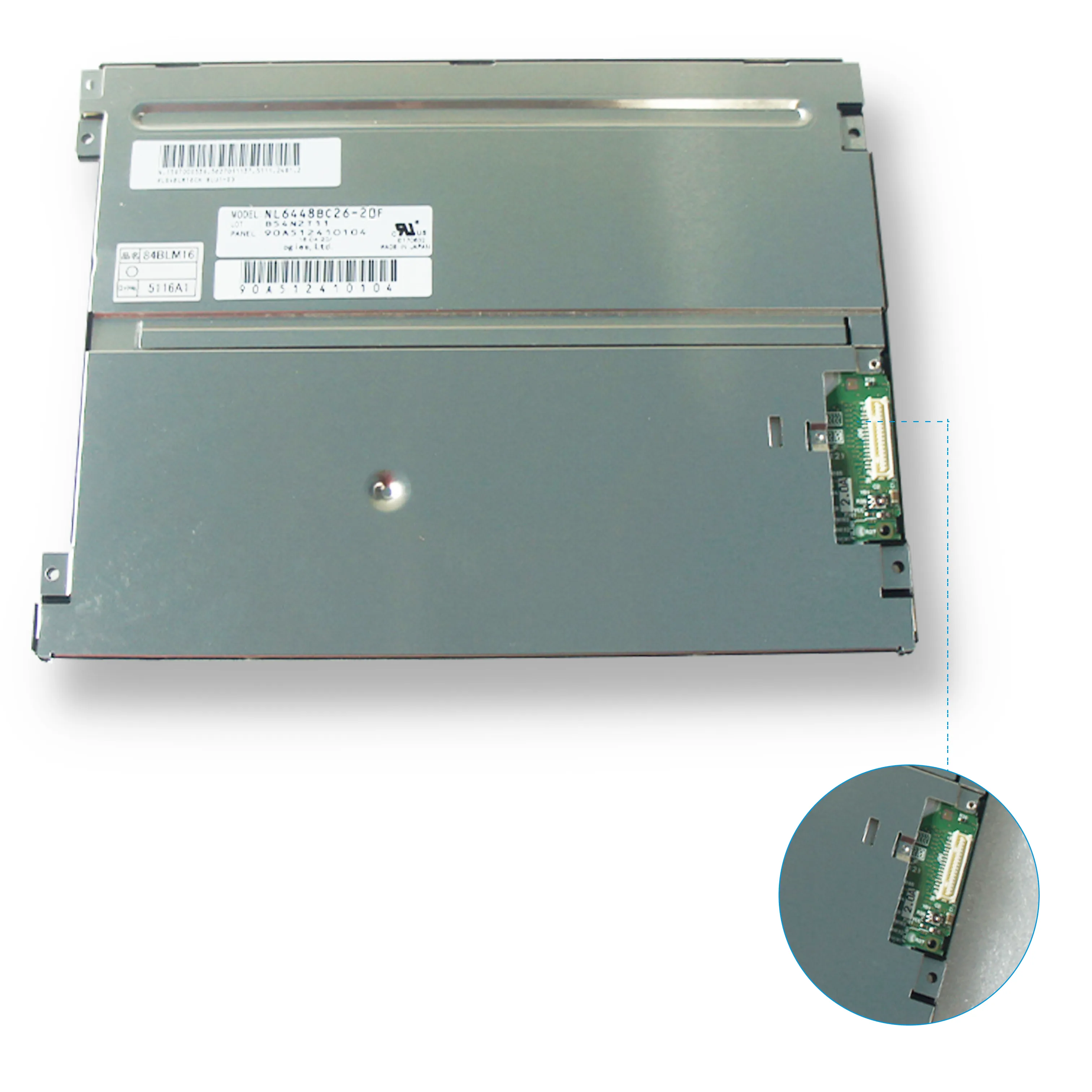

AA104SH02 Mitsubishi 10.4 inch 800*600 Lcd Panel Display
In the intricate world of industrial and embedded display solutions, the Mitsubishi AA104SH02 stands as a testament to a specific era of engineering excellence. This 10.4-inch LCD panel, with its 800 x 600 SVGA resolution, represents more than just a collection of specifications; it embodies a legacy of reliability designed for mission-critical environments. While newer high-definition displays dominate consumer markets, panels like the AA104SH02 continue to be the lifeblood of specialized systems where longevity, stability, and precise compatibility are paramount.
This article delves into a comprehensive analysis of the Mitsubishi AA104SH02. We will move beyond basic datasheet parameters to explore its core technological architecture, the specific market niches it was engineered to serve, and the tangible benefits it offers in those applications. Furthermore, we will address the practical considerations of integration, its position in the modern landscape of display technology, and crucial guidance for sourcing and maintaining this industrial-grade component. Our goal is to provide a resource that offers genuine depth and practical value for engineers, procurement specialists, and technical decision-makers.
Core Technology and Specifications Decoded
The foundation of the AA104SH02's reliability lies in its mature and robust technology. It utilizes a Super Fine TFT (Thin-Film Transistor) active matrix LCD, a proven workhorse known for consistent performance. The 800 x 600 pixel array, while not high by today's consumer standards, delivers a sharp and functional pixel density for its 10.4-inch diagonal size, resulting in clear, legible characters and graphics essential for human-machine interface (HMI) applications.
Key to its operation is the CCFL (Cold Cathode Fluorescent Lamp) backlighting system. This technology, though largely succeeded by LEDs in consumer goods, offers a distinct advantage in controlled industrial settings: exceptional brightness uniformity and a stable, predictable light output over a very long lifespan. The panel features a standard LVDS (Low-Voltage Differential Signaling) interface, ensuring robust and low-noise data transmission. Its wide operating temperature range and high durability against vibration and shock are not optional extras but integral design features, cementing its role as an industrial component.
Primary Applications and Target Industries
The AA104SH02 was not designed for casual browsing or multimedia consumption. Its DNA is coded for industrial automation and embedded systems. You will most commonly find this panel at the heart of factory floor machinery, serving as the primary operator interface for PLCs (Programmable Logic Controllers), CNC (Computer Numerical Control) systems, and test/measurement equipment. Its clarity and reliability under stress make it ideal for these environments.
Beyond manufacturing, this display has a storied history in medical instrumentation (such as patient monitors and diagnostic devices), transportation systems (in-vehicle information displays and control panels), and point-of-sale/kiosk solutions. In each case, the common thread is the need for a display that functions as a dependable, long-term component within a larger, often expensive, system. The AA104SH02 provides the visual interface that operators and technicians rely on for years, if not decades.
Advantages in Niche Industrial Environments
Choosing the AA104SH02 over a modern commercial panel is a deliberate engineering decision driven by specific advantages. Foremost is its extended product lifecycle and availability. Unlike consumer displays that may be discontinued within a year, industrial panels like this one are often supported for many years, which is critical for long-term product maintenance and service.
Secondly, its electrical and mechanical compatibility is a major benefit. Systems originally designed around this panel's physical dimensions, mounting holes, connector type, and voltage requirements can be repaired or refurbished with a direct replacement, avoiding costly and time-consuming system redesigns. Furthermore, the performance characteristics—such as its brightness, contrast ratio, and viewing angle—are guaranteed across the specified temperature range, ensuring consistent readability in a hot factory or a cold warehouse, which is not always the case with repurposed consumer screens.


Integration and Interface Considerations
Successfully integrating the AA104SH02 requires attention to its specific interface and power needs. The panel operates on a single LVDS (Low-Voltage Differential Signaling) channel, which is a digital standard designed to minimize electromagnetic interference. Engineers must ensure their system's graphics controller or LVDS transmitter is compatible with the panel's native timing and signal requirements.
Powering the CCFL backlight requires a high-voltage inverter, a component separate from the logic board that drives the LCD itself. This adds a layer of complexity compared to modern LED-backlit panels. When replacing a failing unit in an existing system, it is crucial to verify not just the panel model, but also the compatibility of the inverter and cabling. A mismatch can lead to dim backlighting, flickering, or complete failure to illuminate.
The Modern Context: Legacy Tech in a 4K World
In an age of 4K OLED and ultra-slim bezels, the AA104SH02 might seem anachronistic. However, its value proposition remains strong in its core domain. It represents a mature, stable, and fully depreciated technology. For ongoing production of established industrial equipment or for maintenance, repair, and operations (MRO) activities, the predictability and known failure modes of this panel are assets.
The market shift has, however, created a landscape where the AA104SH02 is primarily available as a replacement or refurbished component. New old stock (NOS) or professionally refurbished units from reputable suppliers become the primary source. This reality makes understanding quality grading, warranty terms, and supplier verification more important than ever when procuring this display.
Sourcing, Verification, and Longevity Planning
Procuring a genuine and functional AA104SH02 panel requires a strategic approach. Due to its end-of-life status from the original manufacturer, the supply chain is dominated by specialized industrial electronic distributors. Key steps include: verifying the exact model number and revision (even minor suffixes can indicate critical differences), requesting detailed photos of the actual unit to check for physical damage or screen defects, and confirming the testing protocol used by the supplier.
For system designers currently relying on this panel, developing a longevity and obsolescence plan is prudent. This involves securing a small inventory of tested units for critical spares and beginning to evaluate potential "drop-in" replacement panels with modern LED backlights and compatible interfaces, which may offer future-proofing benefits while maintaining system integrity.
Frequently Asked Questions (FAQs)
10. How do I power the CCFL backlight?You need a compatible CCFL inverter module that matches the backlight's voltage and current specifications. This is separate from the LVDS signal connection.
Conclusion
The Mitsubishi AA104SH02 10.4-inch LCD panel is far more than a simple display; it is a specialized industrial component with a legacy of dependable service. Its value lies not in cutting-edge pixel density, but in its proven performance, rugged design, and critical role within long-lifecycle systems. For engineers and maintainers in industrial automation, medical technology, and transportation, understanding this panel's specifications, integration requirements, and modern sourcing landscape is essential knowledge.
In a rapidly evolving technological world, the AA104SH02 serves as a powerful reminder that appropriateness and reliability often trump raw specifications. Its continued relevance underscores the enduring need for purpose-built components that offer stability and compatibility, ensuring that vital machinery and instruments remain operational for years to come. When dealing with such legacy technology, informed procurement and strategic planning become key to sustaining the systems that depend on it.